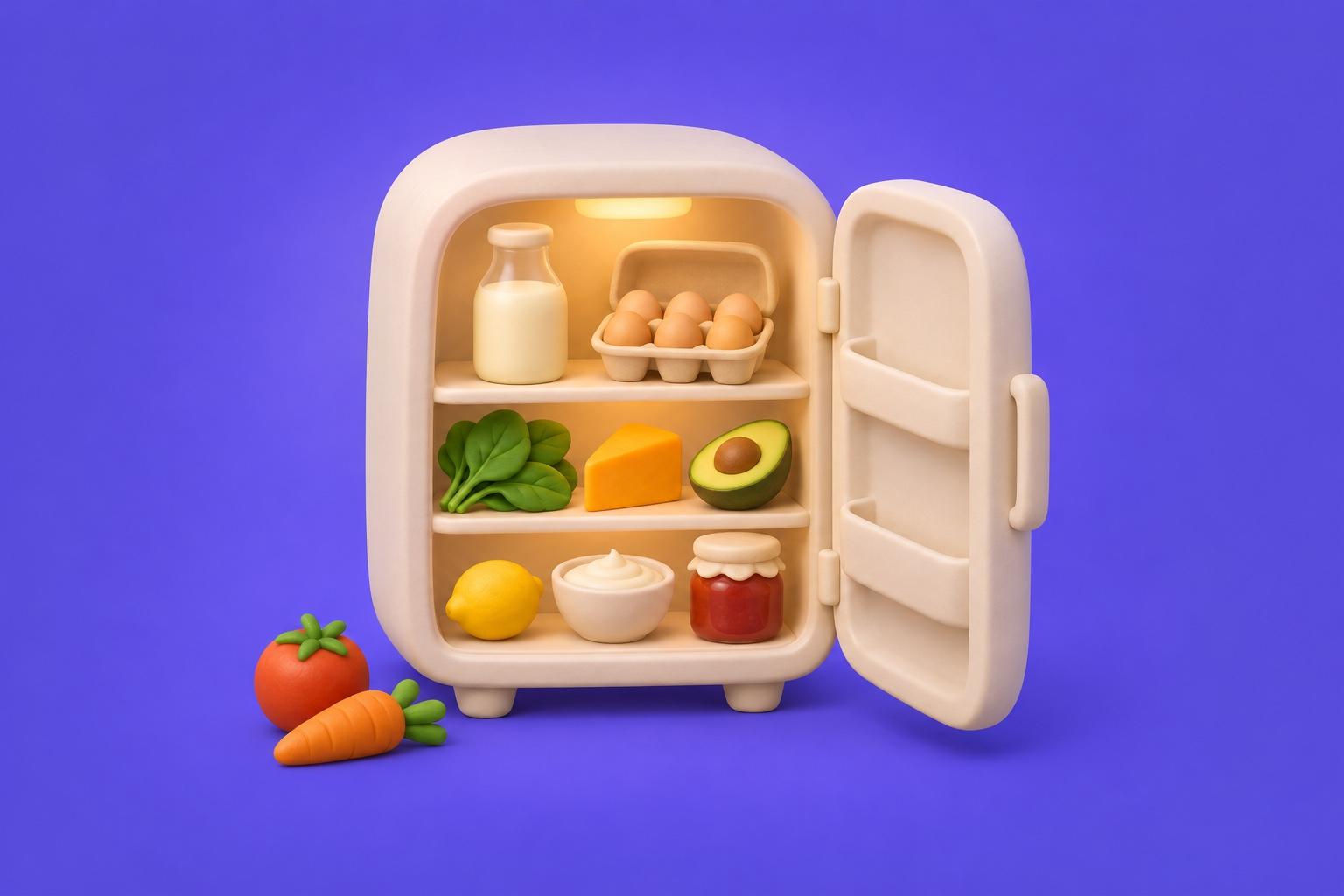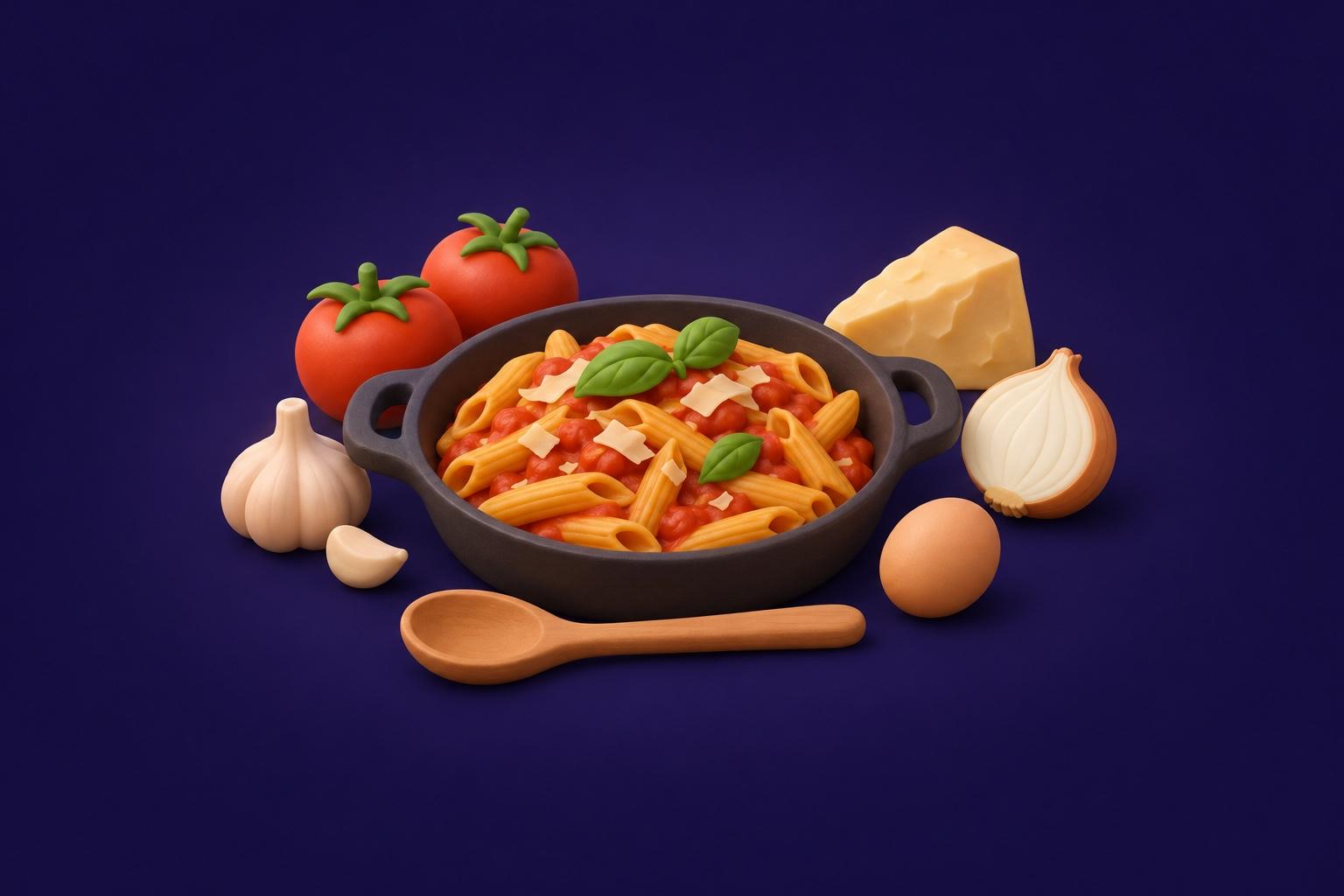
It’s 6:40pm. You open the fridge, look at it for a while, close it, and open it again in case something has changed. There’s “nothing to eat.” There’s also half an onion, some eggs, a tired zucchini, most of a block of cheese, and a jar of something red.
That’s dinner. It just doesn’t look like a recipe yet.
You don’t need to be an inventive cook to turn odds and ends into a meal. You just need a simple pattern.
Start with what needs eating first
Don’t start with “what do I feel like?” Start with “what won’t survive until Friday?”
Look for whatever is closest to its limit: wilting greens, opened cream, cooked rice from two days ago, the last of the chicken. Start the meal around that ingredient. Everything else is supporting cast.
If you’re not sure what’s on the clock, a quick fridge inventory sorted by “use first” answers the question before you open the door.
Use the dinner formula
Almost every weeknight dinner is built from four parts:
- A base: pasta, rice, bread, tortillas, potatoes, noodles, or grains.
- A vegetable (or three): whatever needs using. Fresh, frozen, or roasted all work.
- A protein: eggs, beans, chicken, tofu, canned fish, cheese, or leftover meat.
- Flavor: garlic, lemon, soy sauce, chili, herbs, parmesan, a spoonful of pesto.
Pick one from each row using what you have, and you have a meal. That tired zucchini, plus pasta, plus eggs and cheese, plus garlic and black pepper, is a very respectable zucchini carbonara.
Try it with the kind of things most kitchens have lying around:
Try the dinner formula
Pick one from each row, using whatever needs eating.
Tonight
Zucchini pasta with eggs
Soften the zucchini and garlic in olive oil, take it off the heat, and toss with hot pasta, beaten eggs, and a splash of pasta water.
Four choices in each of four rows make 256 different dinners out of 16 ordinary ingredients.
Five formats that take almost anything
When you can’t picture the dish, pick a format. These five are forgiving on purpose.
Pasta with whatever
Sauté garlic in olive oil, add your vegetables, toss with pasta and a splash of the cooking water, and finish with cheese or lemon. Works with greens, tomatoes, mushrooms, canned fish, or the last of a jar of anything.
Fried rice
Day-old rice is the best rice for this. Fry it hot with chopped vegetables, push it aside, scramble an egg in the gap, and season with soy sauce. Stray carrots, half a bell pepper, and frozen peas all work here.
Eggs for dinner
A frittata handles cooked vegetables, cheese, potatoes, and herbs effortlessly. So do omelets, shakshuka, and a fried egg on top of last night’s leftovers.
Soup or stew
Soft vegetables, beans, grains, and the ends of things all belong in a pot with stock and an onion. Blend it if the vegetables are past their good looks.
A tray bake
Chop it, oil it, season it, and roast it at high heat (around 425°F). Vegetables, sausages, chicken thighs, chickpeas, and potatoes can share one pan and come out better for it.
Stock the staples that make this work
You don’t need a full pantry. You need the dozen things that turn odd ingredients into dinner:
- Bases: pasta, rice, and something bready in the freezer.
- Cans: tomatoes, beans or chickpeas, and tuna or another canned fish.
- Flavor: olive oil, garlic, onions, soy sauce, lemons, and a hard cheese like parmesan.
- The freezer: peas, spinach, and stock.
- Eggs. Always eggs.
With those on hand, almost anything that needs using has a way out.
Swap with confidence
Most recipes are more forgiving than they look. A few swaps that rarely fail:
| The recipe wants | You can use |
|---|---|
| Spinach | Kale, chard, arugula, or any soft green |
| Cream | Greek yogurt or cream cheese, stirred in off the heat |
| Fresh herbs | A smaller amount of dried, or a spoonful of pesto |
| Lemon juice | Vinegar, a little at a time |
| Chicken | Chickpeas, white beans, or tofu |
| Shallots | Onion, and a bit less of it |
Let something else do the matching
The hardest part of all this is holding the whole kitchen in your head: what’s there, how old it is, and what it could become. That’s the part worth handing off.
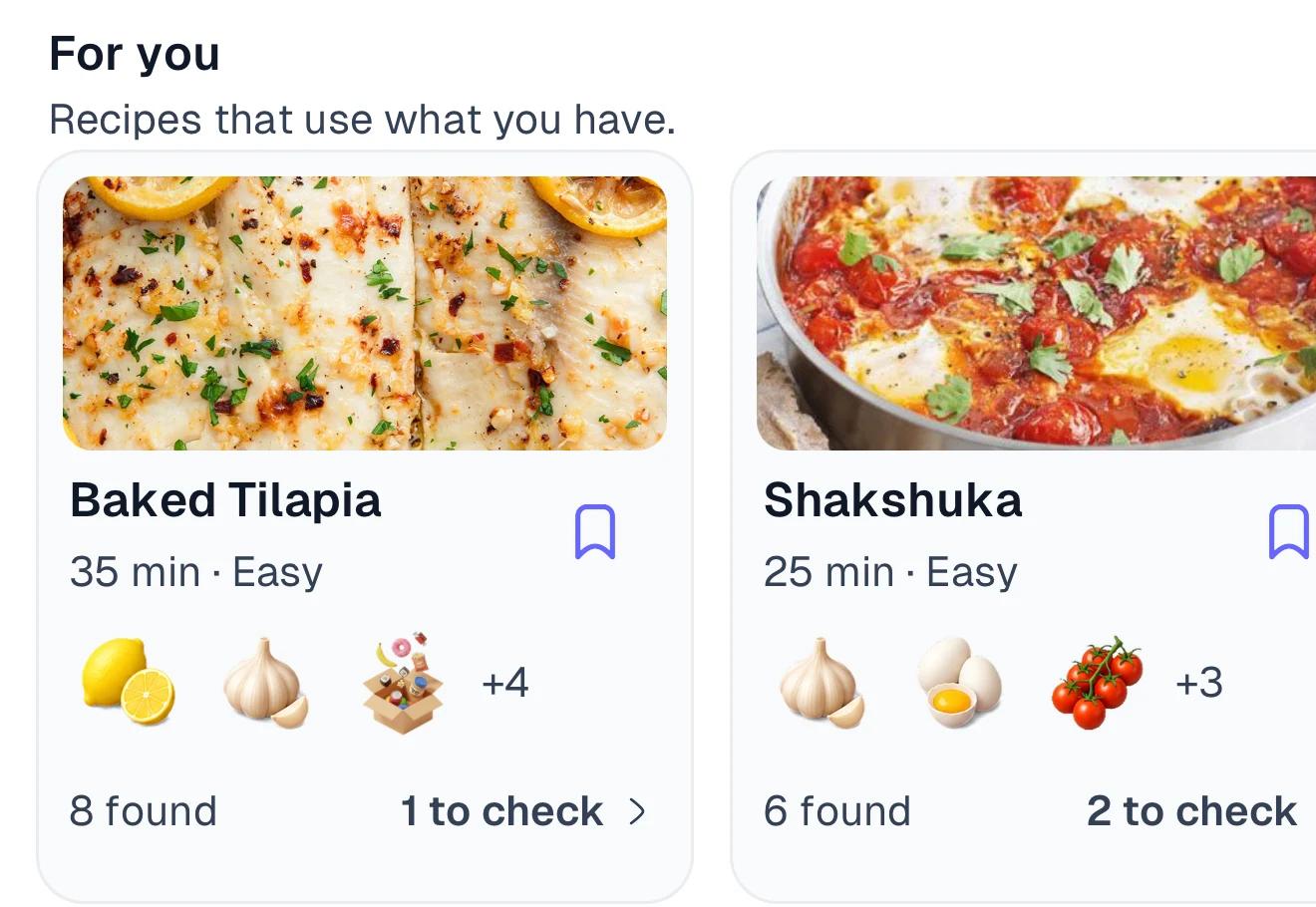
Noshby keeps track of what you have and suggests recipes that start from it. Each suggestion shows how many of its ingredients are already in your kitchen, so “8 of 10 at home” beats “needs a full shopping trip.” If you’d rather describe a craving (“something creamy with mushrooms, ready in half an hour”), Noshby can put together a recipe around that and what’s on your shelves.
Start with what needs eating, pick a format, and add flavor. Once you want to do the same thing for a whole week instead of one night at a time, here’s how to plan a week around what you already have.