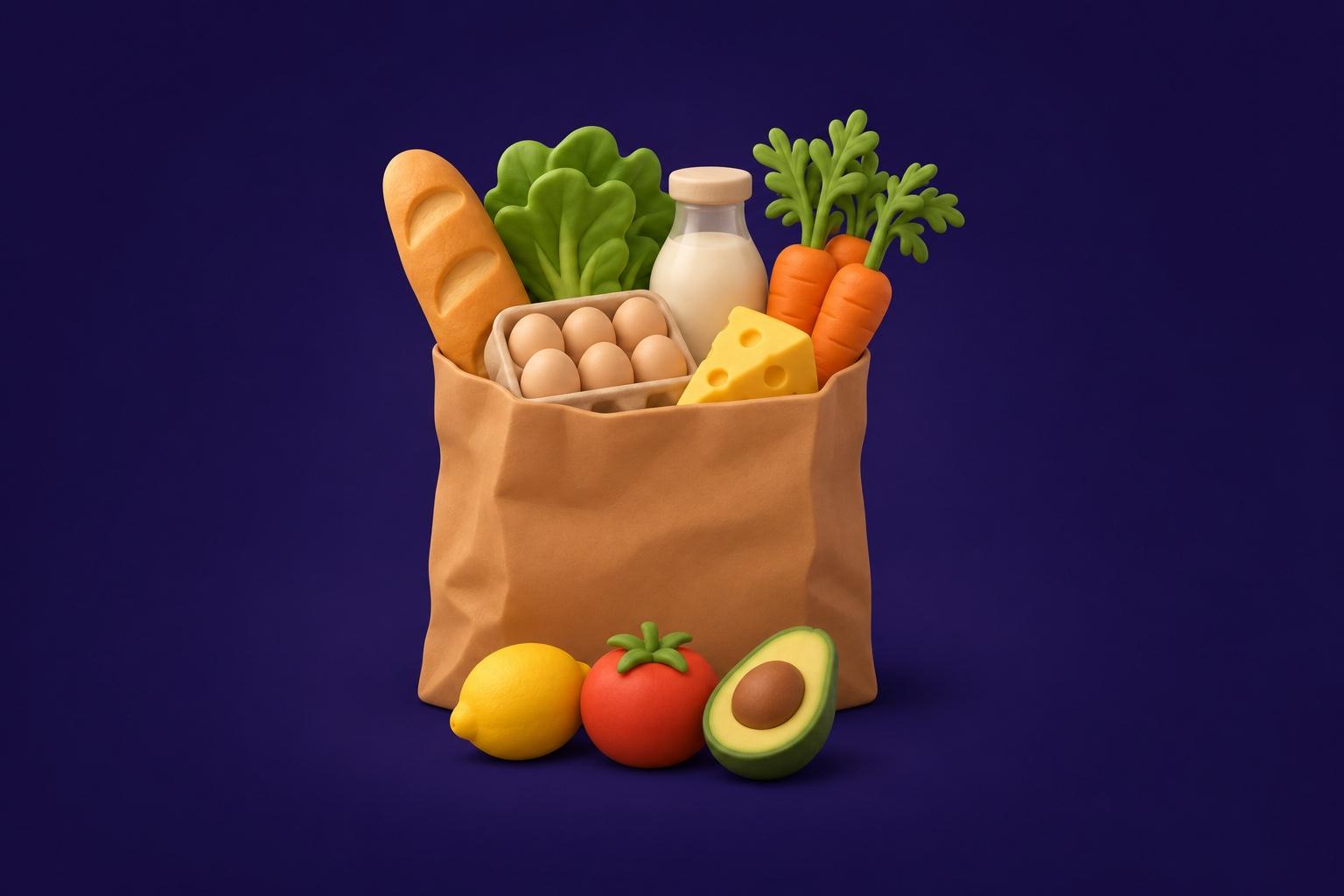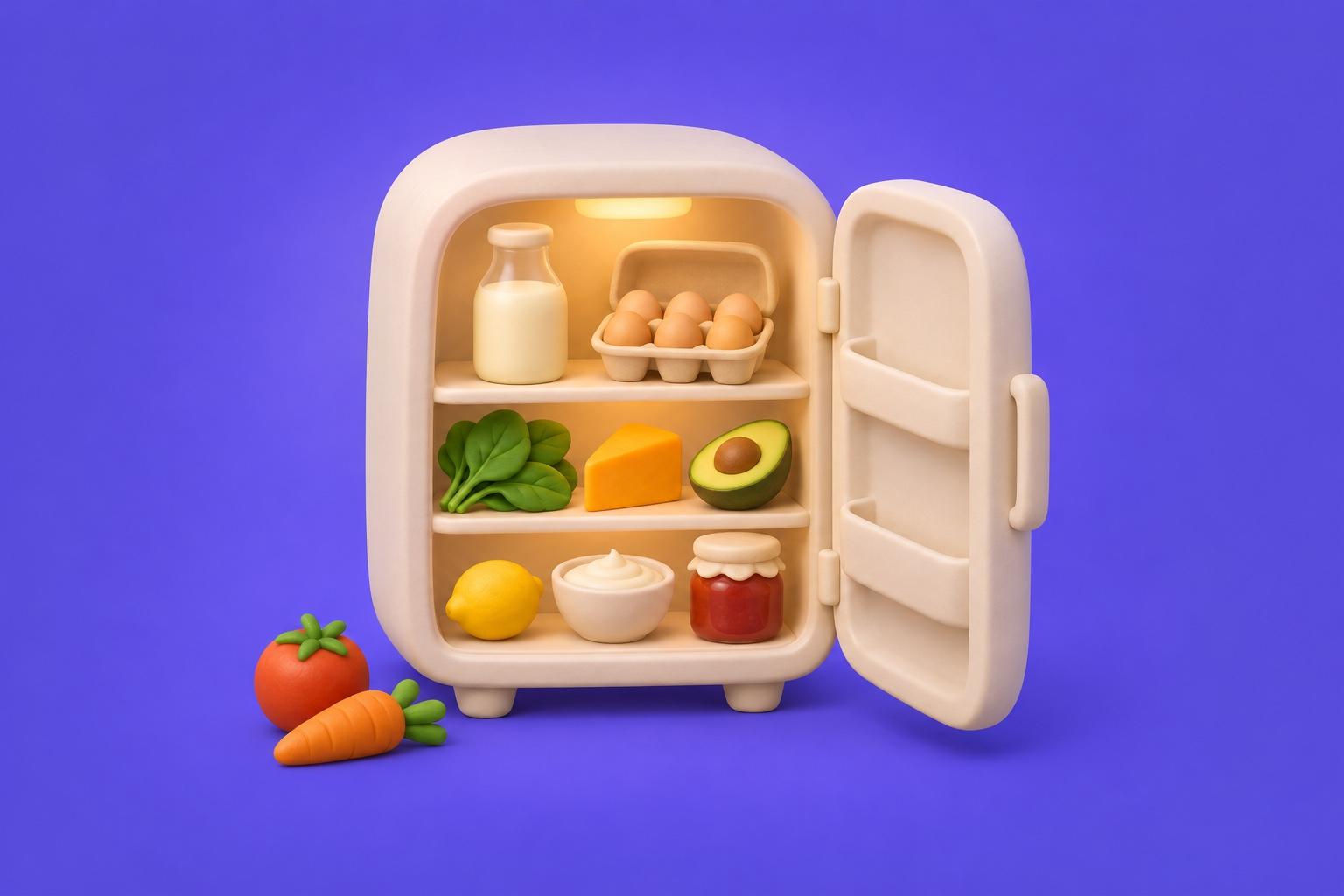
Imagine leaving the grocery store, setting one bag in every nine down on the curb, and driving home. Nobody would do that on purpose. On average, though, that’s roughly what happens in American kitchens, just a forgotten tub of yogurt or half-used pack of chicken at a time.
In 2025 the U.S. Environmental Protection Agency put a fresh price on it. Here’s what the numbers say, what they add up to for a household your size, and where the money actually goes.
The number: $728 per person, every year
The EPA estimates that the average American pays for about $728 of food each year that never gets eaten. That’s $14 a week, per person, at 2023 grocery prices.
Food waste in the U.S., per person
Food that was bought and never eaten.
- of food wasted per person each year
- $728
- a week, per person
- $14
- of edible food per person each year
- 256 lb
- of what a person spends on food
- 11%
Source: U.S. EPA, Estimating the Cost of Food Waste to American Consumers (2025). U.S. averages at 2023 grocery prices.
A few things about that figure are worth knowing:
- It counts only the edible part of food. Banana peels, bones, and eggshells aren’t included.
- It’s about 11% of everything a person spends on food, at home and eating out. That works out to more than five weeks of food spending a year.
- The EPA says it’s probably an underestimate, because food wasted at restaurants was priced as if it had been bought at a grocery store.
What that means for your household
To get a household figure, the EPA multiplies the per-person cost by the number of people at home. A household of four comes to $2,913 a year, or $56 a week.
What wasted food costs in a year, by household size
EPA’s per-person estimate, multiplied by the number of people at home.
- 1 person$728
- 2 people$1,456
- 3 people$2,184
- 4 people$2,913
- 5 people$3,641
- 6 people$4,369
Source: U.S. EPA, Estimating the Cost of Food Waste to American Consumers (2025). U.S. averages at 2023 grocery prices.
Real homes aren’t quite that tidy. A person living alone may waste more per head, because so much food is sold in sizes meant for sharing, and a big family may waste a little less each. Treat the bars as a solid starting estimate for a typical household of that size.
Want your own number? Set the size of your household here.
Estimate your household
Pick how many people eat at home.
2people
- a week
- $28
- a month
- $121
- a year
- $1,456
If your household wasted less, a year would look like this
- $146kept by wasting a tenth less
- $364kept by wasting a quarter less
- $728kept by wasting half less
That is about 512 pounds of food a year for 2 people. These are national averages, so your own number may be higher or lower.
Source: U.S. EPA, Estimating the Cost of Food Waste to American Consumers (2025). U.S. averages at 2023 grocery prices.
For a four-person household, $2,913 works out to $243 a month. That’s a car payment, a round-trip flight, or a full month of groceries.
Where the money goes
The foods we throw out most by weight aren’t the ones costing us the most.
Where the money goes
Dollars of wasted food per person each year, by kind of food.
- Meat$133
- Cheese, yogurt, and other dairy$74
- Processed fruit and juice$66
- Fish and seafood$61
- Fresh vegetables$59
- Sugar and sweeteners$58
- Poultry$56
- Fresh fruit$45
- Bread, pasta, and grains$42
- Canned and frozen vegetables$39
- Fats and oils$38
- Milk$26
- Eggs$20
- Nuts$10
Source: U.S. EPA, Estimating the Cost of Food Waste to American Consumers (2025). U.S. averages at 2023 grocery prices.
By weight, the biggest losses are sweeteners, fresh vegetables, and grains like bread and pasta. By cost, meat is far ahead: about $133 per person a year, nearly twice the next category. Dairy, processed fruit and juice, and fish follow.
That changes where the effort pays off. Tossing a limp carrot costs pennies. Forgetting a pack of pork chops or chicken in the back of the fridge costs you dinner for four.
Wait, wasn’t it $1,500?
You may have seen “the average family of four wastes $1,500 a year.” That number is real, just old. It comes from a 2014 USDA study that used 2010 prices and found $371 of waste per person.
Food prices have climbed by more than half since then. When the EPA repeated the method with newer data, the per-person figure roughly doubled to $728. Another recent estimate, from the nonprofit ReFED, lands close by at about $780 per person.
So if you still have $1,500 in your head, the up-to-date number for a household of four is nearly twice that.
How to keep more of it
You don’t need to reach zero. In a home of four, wasting a quarter less keeps about $728 a year. The fastest wins follow the money:
- Look after the expensive things first. Meat, fish, and dairy are where the dollars are. If you won’t cook meat within a day or two of buying it, freeze it the day it comes home.
- Know what the dates mean. Most “best by” dates are about quality, not safety, and plenty of good food is thrown out early. Here’s what food date labels really mean.
- Make “use first” visible. Food gets wasted when it gets forgotten. A simple fridge inventory sorted by what needs eating keeps the fragile things in front of you.
- Plan from your kitchen, not from recipes. Choose meals around what you already have, then shop for the gaps. Our guide to meal planning around what you have walks through it.
- Have a use-it-up dinner every week. Stir-fry, soup, a skillet pasta. Here’s how to cook with what’s left.
Try a two-week tally. Each time something edible goes in the trash, jot down what it was and roughly what it cost. Your own list will tell you more than any national average, and it usually points at two or three repeat offenders.
Where Noshby fits
Most wasted food isn’t about carelessness. You bought it with a plan, pushed it behind the milk, and forgot it was there.
Noshby handles the remembering:
- It keeps track of what you bought and sorts your kitchen by what needs eating first.
- It reminds you before food expires, while there’s still time to cook it or freeze it.
- It suggests dinner from what you have, so the expensive things in your fridge get cooked before they turn.
- It builds a shopping list of only what’s missing, so less comes home to be forgotten.
Most of that wasted money slips away a few dollars at a time on food you fully meant to eat, which makes it a very fixable problem.