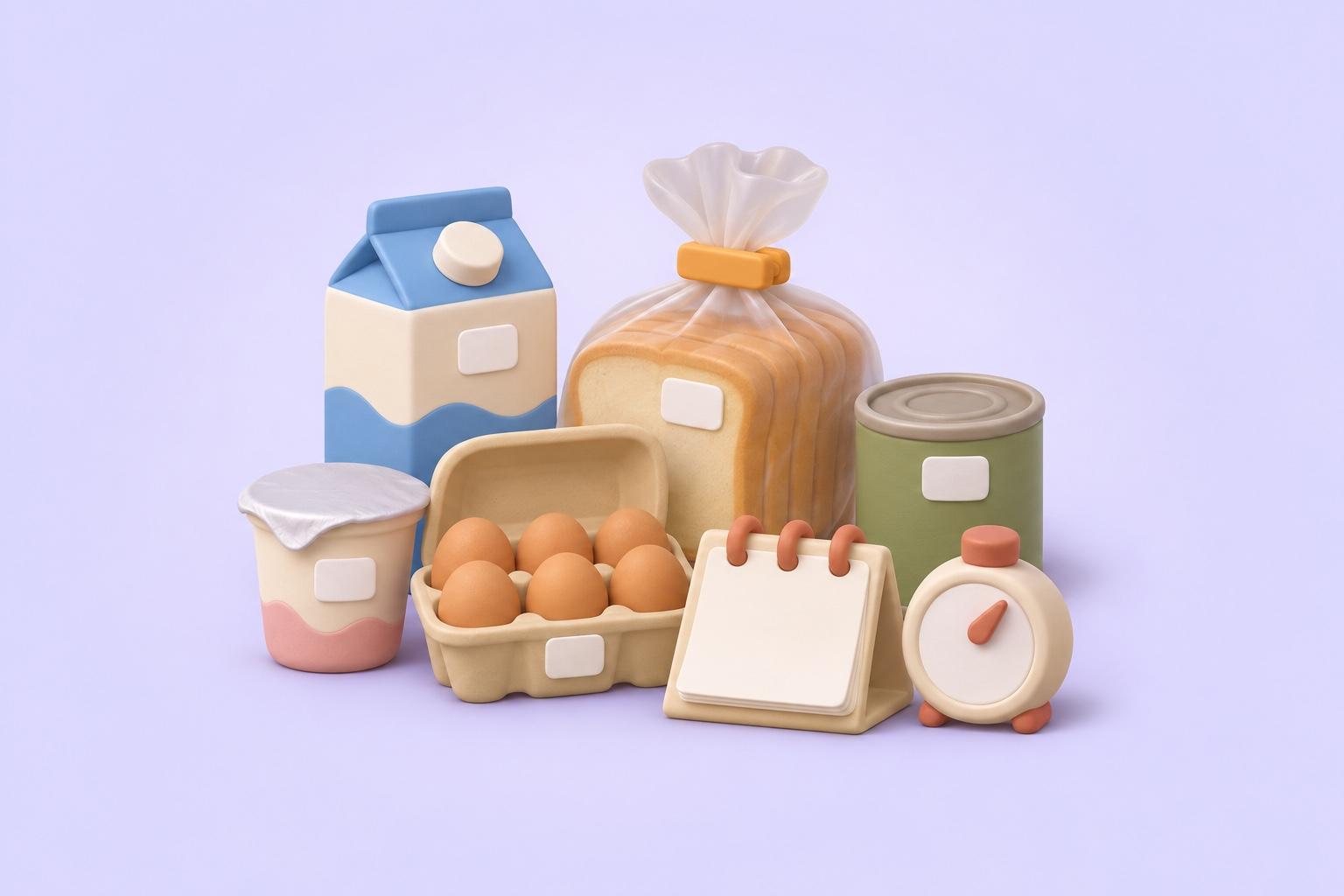
You’re standing at the fridge holding a tub of yogurt. The date on the lid was yesterday, but it looks and smells fine. Do you eat it or throw it out?
Plenty of good food ends up in the trash at this exact moment, because the stamp on the package looks like a deadline. In the United States, it almost never is one.
Why almost no food date is a safety deadline
According to the USDA’s Food Safety and Inspection Service, federal law doesn’t require date labels on food, with one exception: infant formula. Everything else is dated voluntarily by the company that makes it, based on when the food should taste its best.
That means most dates are about quality, not safety. Crackers past their date might go a little stale, but they haven’t turned dangerous overnight.
What each label means
| Label | What it tells you | Is it a safety date? |
|---|---|---|
| Best if used by / Best before | When the food will be at its best flavor and quality | No |
| Sell by | How long the store should display the product | No |
| Use by | The last date recommended for peak quality | No, except on infant formula |
| Freeze by | When to freeze the food to keep it at peak quality | No |
The wording differs from brand to brand because no single federal standard exists. The USDA recommends that makers use “Best if Used By,” because research shows people understand it most easily as a quality date.
One real deadline: always follow the “use by” date on infant formula. Don’t buy it or use it after that date.
So is it safe after the date?
Often, yes. The USDA’s guidance is that if a food’s date passes while you’re storing it at home, it should still be safe and wholesome if it’s been handled properly, until spoilage is evident.
Signs of spoilage are the things your senses already know: an off smell, a strange flavor, or a texture that has changed. If you notice any of those, throw it out, no matter what the date says.
Two cautions matter more than any stamp:
- Storage beats dates. A fridge at 40°F (4°C) or below and a freezer at 0°F (-18°C) are what keep food safe. Milk that sat in a warm car for two hours is a problem even if the date is next week.
- You can’t see or smell everything. The bacteria that cause food poisoning don’t always change how food looks or smells. For high-risk foods, follow storage time rather than a sniff test.
Four numbers that matter more than the date
The stamp is about quality. These are about safety.
- food with a date required by federal law: infant formula
- 1
- or colder for the fridge (4°C)
- 40°F
- for the freezer (-18°C)
- 0°F
- days for cooked leftovers in the fridge
- 3 to 4
Source: USDA Food Safety and Inspection Service, Food Product Dating. U.S. rules and guidance.
Foods to be stricter with
Some foods should be eaten or frozen quickly no matter what the package says. These are general USDA guidelines for a fridge at 40°F or below:
How long it keeps in the fridge
Days after you buy, cook, or open it. Whatever the package says, eat it or freeze it before the second part of the bar runs out.
 Raw ground meat1 to 2 days
 Raw chicken and turkey1 to 2 days
 Cooked leftovers3 to 4 days
 Raw steaks, chops, and roasts3 to 5 days
 Opened lunch meat3 to 5 days
Eggs in the shell are the patient ones: they keep 3 to 5 weeks. In the freezer, at 0°F (-18°C), the clock stops for all of these.
Source: FoodSafety.gov, Cold Food Storage Chart. General guidance for a fridge at 40°F (4°C) or below.
If you won’t get to something in time, freeze it. Freezing pauses the clock. If you’re pregnant, older, or have a weakened immune system, or you’re cooking for someone who is, stay on the cautious side and check the cold food storage chart from FoodSafety.gov.
Outside the U.S., “use by” means something else
If you’re reading this in the UK or the EU, the rules are different, and stricter:
- Use by is about safety. Don’t eat, cook, or freeze food after its use-by date, even if it looks and smells fine.
- Best before is about quality. Food is safe to eat after it, though it may not be at its best.
When in doubt, follow the rules of the country you bought the food in.
How to waste less without taking risks
- Treat the date as a hint, then check the food. For shelf-stable and low-risk foods like crackers, cereal, canned goods, and hard cheese, your eyes and nose are good judges.
- Go by storage time for risky foods. Raw meat, poultry, fish, and leftovers follow the chart above, not the sniff test.
- Freeze what you won’t reach. Bread, meat, cooked grains, and most leftovers freeze well. Label them with the day they went in.
- Eat the oldest first. When you unpack groceries, slide older food to the front. A simple fridge inventory makes this nearly automatic.
- Plan a “use it up” dinner each week. Here’s how to cook with what you already have.
Where Noshby fits
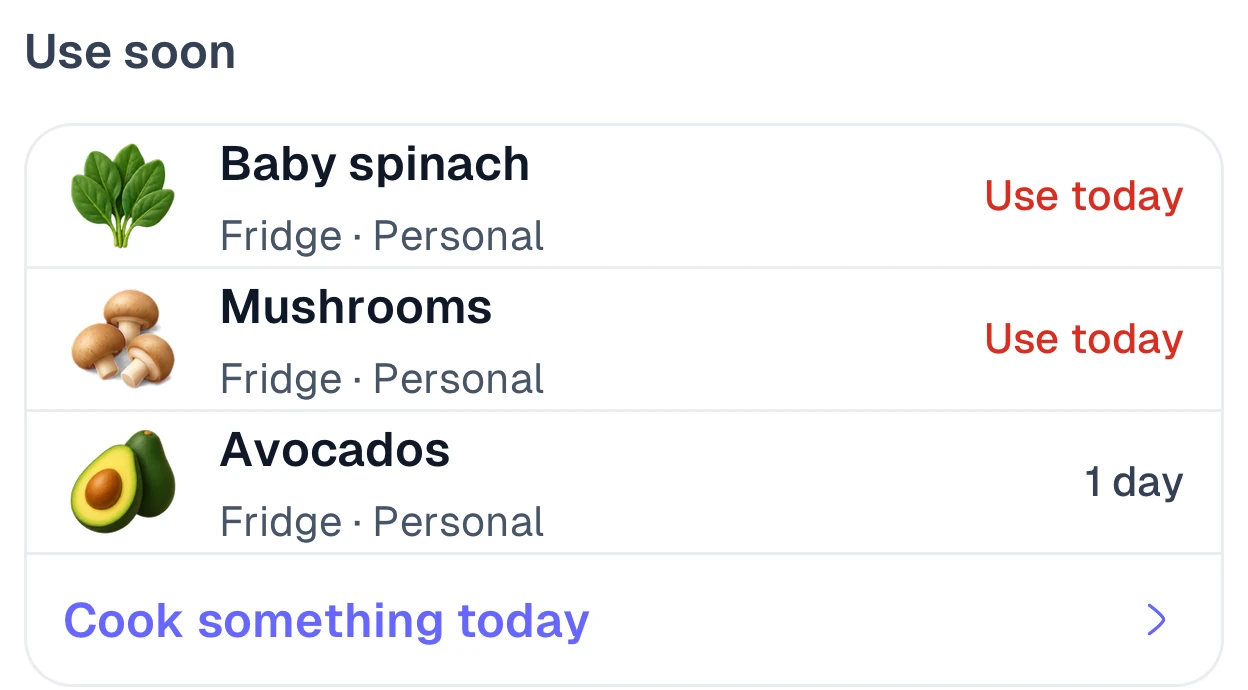
Nobody wants to stand at the fridge reading tiny print on every package. Noshby tracks expiry dates as you add groceries, sorts your kitchen by what needs eating first, and sends a reminder before food turns. You still make the call on what’s good to eat, just while there’s still time to use it.