Most meal plans start in the wrong place. You scroll through recipes, pick seven that look delicious, write a long shopping list, and come home with bags of new groceries to squeeze in beside the old ones. Meanwhile, the food you already bought gets pushed to the back and goes soft in the drawer.
There’s a better order: start with your kitchen, then pick the meals, then shop. Some people call it reverse meal planning. Really, it’s just shopping your own kitchen first.
Why planning backwards works
When you plan from recipes, what’s already in the fridge becomes an afterthought. When you start with your kitchen, every meal has a head start, and your shopping list shrinks to the handful of things you’re missing.
It saves real money, too. The U.S. Environmental Protection Agency estimates that wasted food costs about $728 per person each year (nearly $3,000 a year for a household of four), and its advice for preventing waste at home starts with planning meals and shopping with a list. Food with a plan gets eaten. Everything else sits in the crisper until you give up on it.
What wasted food costs in a year, by household size
EPA’s per-person estimate, multiplied by the number of people at home.
- 1 person$728
- 2 people$1,456
- 3 people$2,184
- 4 people$2,913
- 5 people$3,641
- 6 people$4,369
Source: U.S. EPA, Estimating the Cost of Food Waste to American Consumers (2025). U.S. averages at 2023 grocery prices.
Step 1: Take stock (five minutes)
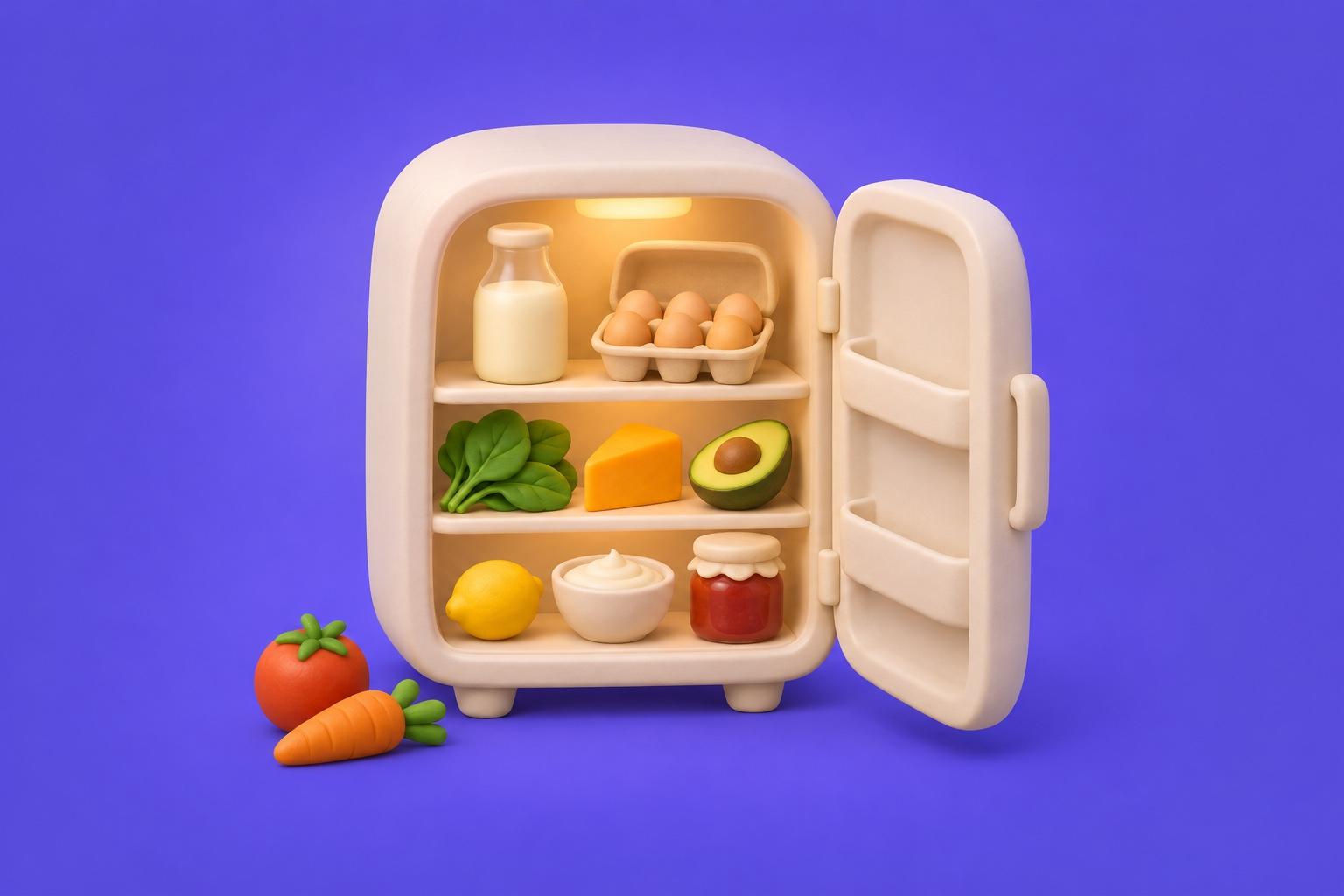
Before you think about recipes, look at what you have:
- Fridge: what needs eating in the next few days?
- Freezer: what’s been sitting in there for weeks and needs to get used?
- Pantry: which bases (pasta, rice, beans, canned tomatoes) could anchor a meal?
Jot down the things that need using first. If you keep a running kitchen inventory, this step is already done.
Step 2: Build meals around what needs using
Take your “use first” list and build dinners around it. A pack of sausages and a head of broccoli become a sheet-pan dinner. Half a bag of greens and some feta become a frittata. Yesterday’s rice becomes fried rice.
You don’t need a recipe for every night. The dinner formula (a base, a vegetable, a protein, and flavor) is enough to turn most ingredients into a plan.
Aim for four or five dinners. When you plan all seven nights, one late workday or last-minute invite leaves you with groceries you never cook.
Step 3: Put the week in the right order
Order matters as much as the meals themselves. Cook the fragile things first:
| When | Cook with | For example |
|---|---|---|
| Early in the week | Fresh fish, ground meat, leafy greens, berries, soft herbs | Salmon with greens, a big salad |
| Midweek | Chicken, mushrooms, zucchini, peppers, opened dairy | Tray bake, stir-fry, pasta |
| Late in the week | Root vegetables, cabbage, eggs, frozen and canned food | Soup, fried rice, a pantry pasta |
Not sure how long something will last? Our guide to what date labels really mean covers how long common foods keep.
Step 4: Shop for the gaps
Only now do you write the shopping list. Go through each planned meal and note what’s missing. That’s your list.
A few habits keep it honest:
- Check before you leave. A quick look at the fridge beats buying a third jar of mustard.
- Buy for the plan, not the deal. A two-for-one is only a bargain if both get eaten.
- Group the list by aisle. You’ll get through the store faster and spend less time wandering past snacks you didn’t come for.
Step 5: Leave room for real life
A plan that needs a perfect week will fail by Wednesday. Build in some slack:
- One leftovers night. It clears the fridge and gives the cook a night off.
- One flexible night. For takeout, a friend’s invitation, or cereal on the couch.
- Swap freely. If Thursday’s dinner sounds better tonight, trade them. Just keep the fragile food moving first.
At the end of the week, anything still hanging around becomes next week’s Step 1.
A sample week
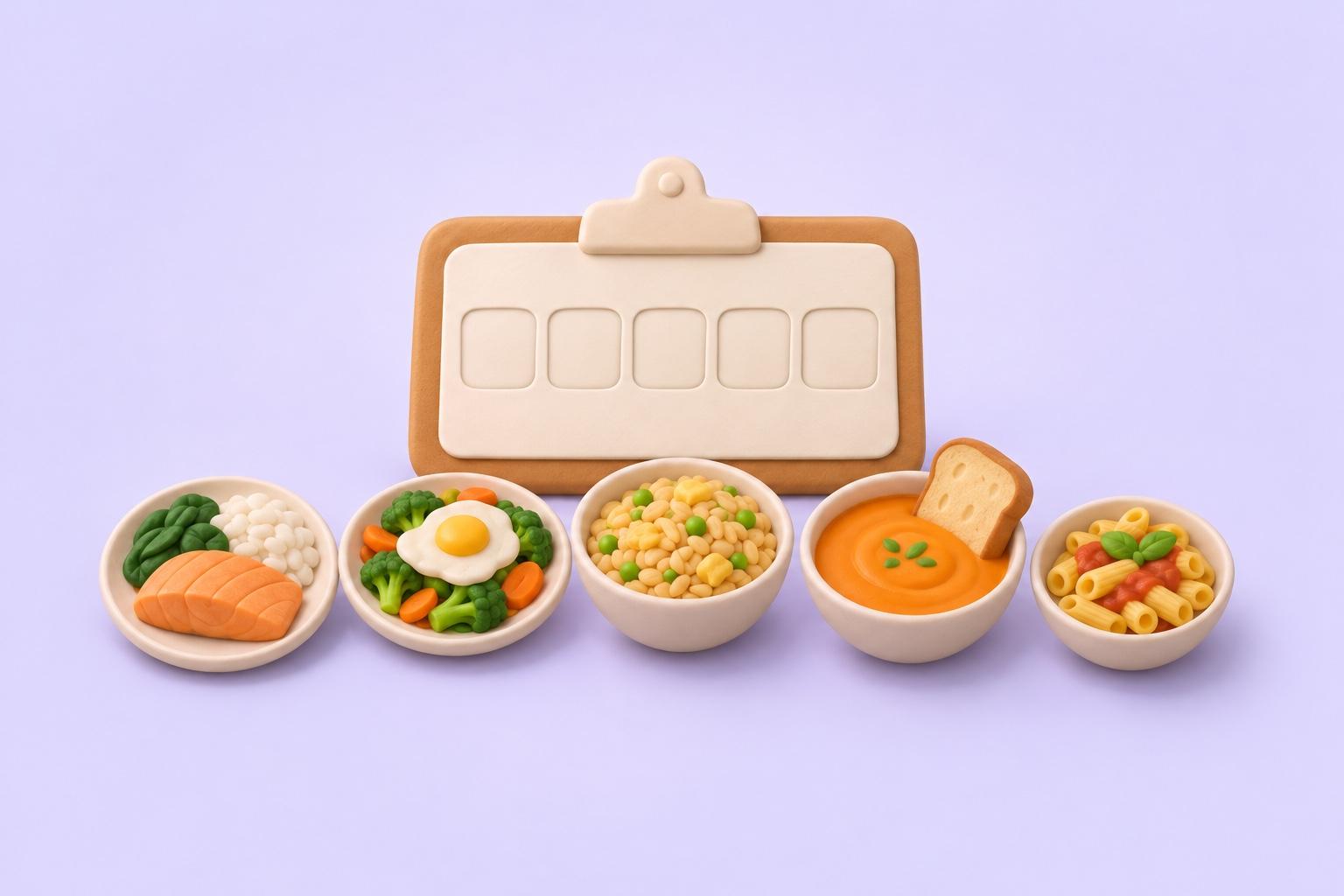
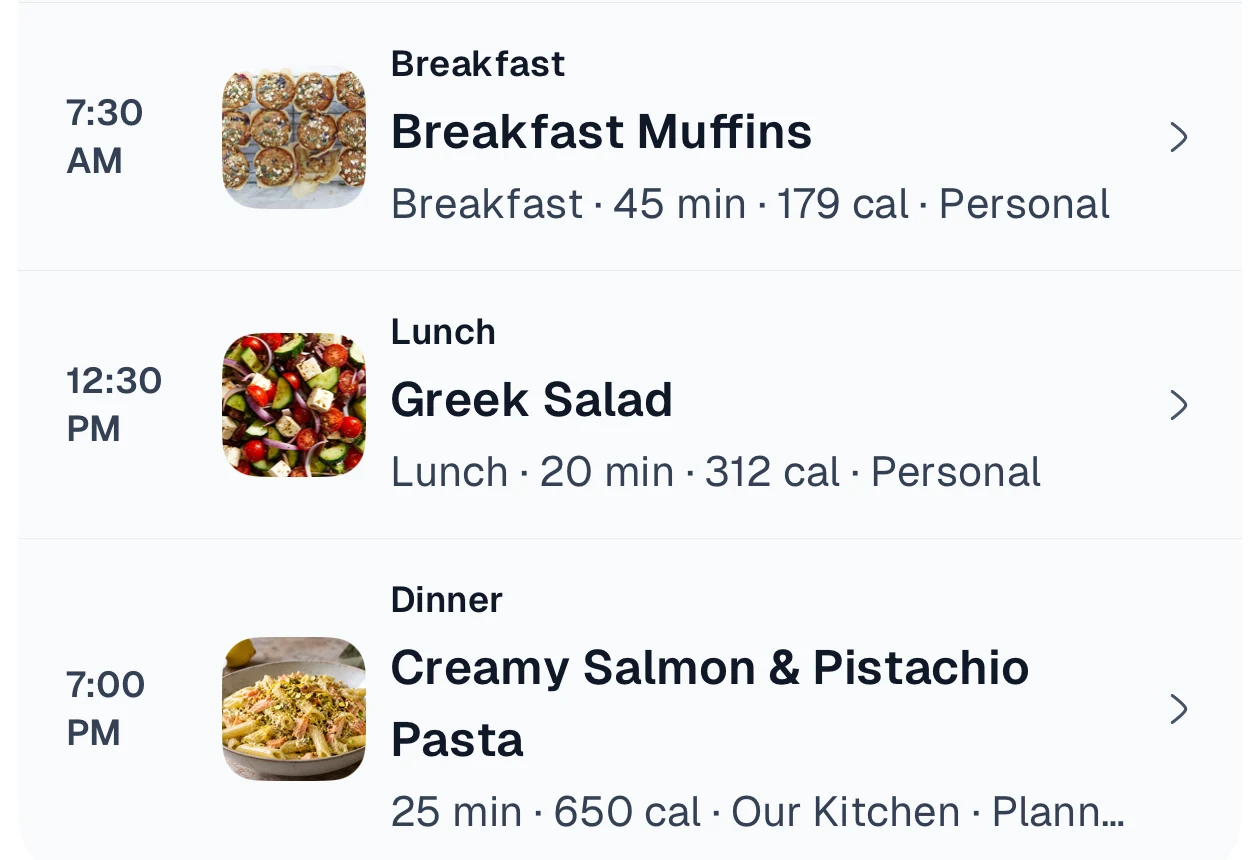
Say your kitchen holds salmon, a bag of spinach, broccoli, carrots, half a carton of eggs, rice, and a lemon. A plan might look like this:
- Monday: lemon salmon with wilted spinach and rice. Cook extra rice.
- Tuesday: broccoli and carrot stir-fry with a fried egg.
- Wednesday: fried rice with the extra rice and any leftover vegetables.
- Thursday: leftovers night.
- Friday: carrot soup with toast, or whatever the week left behind.
The shopping list for that week is short: maybe bread, soy sauce, and an onion. Everything else was already yours.
The sample week at a glance
Five dinners from a kitchen that already held salmon, spinach, broccoli, carrots, eggs, rice, and a lemon.
Mon
Lemon salmon, wilted spinach, and rice
Fragile food first


Tue
Broccoli and carrot stir-fry with a fried egg
Needs soy sauce


Wed
Fried rice with Monday’s extra rice
Needs an onion

Thu
Leftovers night
Clears the fridge
Fri
Carrot soup with toast
Needs bread

Where the week’s ingredients come from
- Already in the kitchen
- 7 of 10
- On the shopping list
- 3 of 10
Where Noshby fits
This method takes about fifteen minutes a week by hand. Noshby does most of it for you:
- It knows what’s in your kitchen and which food needs using first.
- It can draft a week of dinners around that, and around your schedule. You can edit anything.
- It builds a shopping list of only what’s missing, sorted by aisle, and shared with your household.
- Back home, one tap moves your groceries into your kitchen, ready for next week’s plan.
The order stays the same: kitchen first, meals second, shopping last. Once you flip it, grocery trips get shorter and the back of the fridge stops turning into a science experiment.